
Discover the Power of Meditation: A Beginner’s Guide to Finding Inner Peace
The modern world, with its relentless pace and constant demands, often leaves us feeling overwhelmed, stressed, and disconnected from our inner selves. Amidst this chaos, a timeless practice offers a powerful antidote: meditation. Far more than just sitting still, meditation is a journey inward, a deliberate cultivation of awareness that can lead to profound inner peace and a renewed sense of well-being. This guide is designed to demystify meditation for beginners, offering a roadmap to understanding its benefits, getting started, and sustaining a rewarding practice.
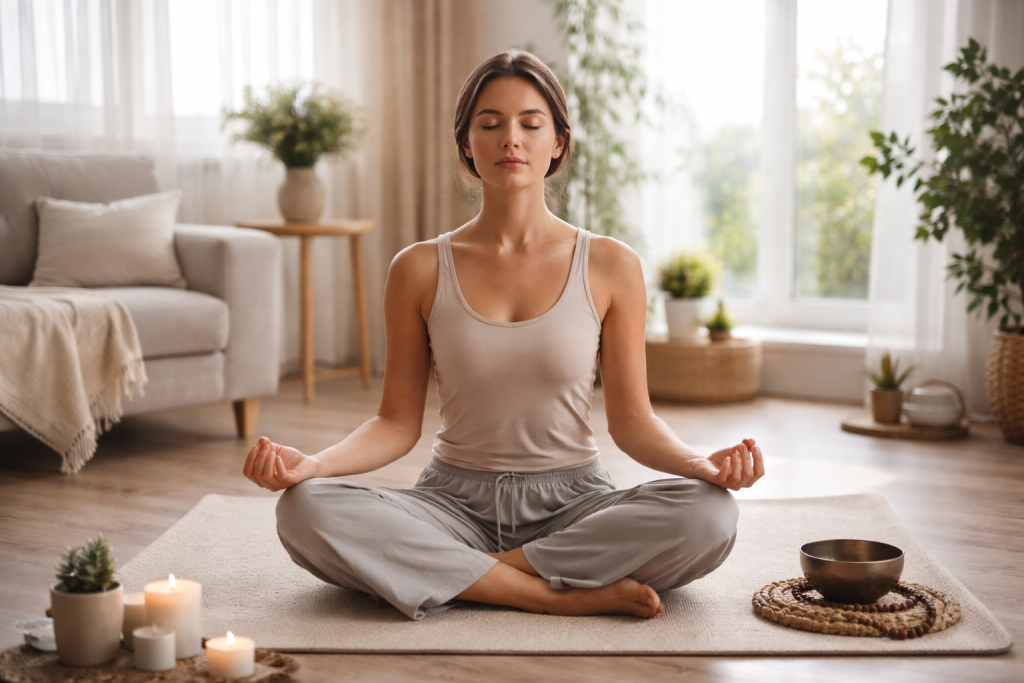
The allure of meditation lies in its remarkable capacity to transform not just our minds, but our entire lives. The advantages extend far beyond a fleeting moment of calm, impacting our physical, mental, and emotional health in myriad ways.
Contents
- 1 Physical Well-being and Stress Reduction
- 2 Mental Clarity and Focus Enhancement
- 3 Emotional Regulation and Resilience Building
- 4 Finding Your Ideal Space and Time
- 5 The Importance of Posture and Comfort
- 6 Starting Small and Being Patient
- 7 Focused Attention Meditation
- 8 Mindfulness Meditation
- 9 Loving-Kindness (Metta) Meditation
- 10 Dealing with a Restless Mind
- 11 Managing Discomfort and Impatience
- 12 Staying Motivated and Consistent
- 13 Establishing a Daily Meditation Habit
- 14 Incorporating Mindfulness into Daily Life
- 15 Finding Support and Resources for Your Meditation Practice
Physical Well-being and Stress Reduction
One of the most immediate and scientifically validated benefits of meditation is its profound impact on stress. When we meditate, our parasympathetic nervous system, responsible for the “rest and digest” response, is activated. This counteracts the perpetual “fight or flight” mode often triggered by daily stressors. Regular meditation has been shown to lower cortisol levels, the primary stress hormone, leading to reduced inflammation, better sleep quality, and even a strengthened immune system. People who meditate often report lower blood pressure and a decreased incidence of stress-related ailments like headaches and digestive issues.
Mental Clarity and Focus Enhancement
In a world brimming with distractions, the ability to focus and maintain mental clarity is a rare commodity. Meditation, particularly practices that involve focused attention, acts like a workout for the brain, strengthening neural pathways associated with concentration. As you train your mind to stay present, you’ll find it easier to concentrate on tasks, improve problem-solving skills, and experience a heightened sense of awareness in your daily activities. This enhanced mental acuity spills over into improved decision-making and a greater capacity for learning new information.
Emotional Regulation and Resilience Building
Meditation offers a powerful tool for navigating the often-turbulent waters of our emotions. Instead of being swept away by anger, anxiety, or sadness, meditation teaches us to observe these feelings without judgment, creating a healthy distance. This practice fosters emotional intelligence, allowing us to understand the roots of our emotions and respond to them with greater wisdom and compassion. Over time, individuals develop greater emotional resilience, enabling them to bounce back more effectively from setbacks and navigate life’s challenges with a more balanced and equanimous perspective.
Embarking on a meditation journey doesn’t require complex rituals or exotic locations. The beauty of this practice lies in its accessibility and simplicity.
Finding Your Ideal Space and Time
Creating a dedicated space, even a small corner, that feels calm and undisturbed can significantly enhance your meditation experience. It doesn’t need to be elaborate; just a quiet spot where you won’t be interrupted. Consider dimming the lights, lighting a gentle candle, or playing soft, instrumental music if that helps you relax. Consistency is key, so try to choose a time that you can realistically commit to each day. Many find the morning a great time to set a positive tone for the day, while others prefer the evening to unwind and release the day’s tensions.
The Importance of Posture and Comfort
While the stereotype of a cross-legged guru is prevalent, comfortable posture is paramount for beginners. You can sit on a cushion with crossed legs, on a chair with your feet flat on the floor, or even lie down if that feels more accessible. The goal is to find a posture that allows your spine to be straight but relaxed, preventing discomfort from becoming a distraction. Your hands can rest gently on your lap, palms up or down, whatever feels most natural. The key is to be at ease, allowing your body to be still and your mind to settle.
Starting Small and Being Patient
Don’t expect immediate enlightenment or to achieve a completely blank mind from day one. Meditation is a practice, and like any new skill, it takes time and persistence to develop. Begin with short sessions, perhaps just 5-10 minutes. As you become more comfortable, you can gradually increase the duration. Be kind to yourself; your mind will wander, and that’s perfectly normal. The practice isn’t about stopping thoughts but about noticing them and gently bringing your attention back to your anchor, whether it’s your breath or a mantra. Patience and self-compassion are your most valuable allies.
The world of meditation is rich and diverse, offering a variety of techniques that cater to different preferences and goals. Experimenting with a few can help you discover what resonates most deeply with you.
Focused Attention Meditation
This is perhaps the most common and accessible form of meditation for beginners. In focused attention meditation, you choose a single object to focus on, such as your breath, a mantra, or a visual image. The breath is a particularly popular anchor because it’s always available and serves as a direct connection to the present moment. When your mind inevitably wanders, you gently guide your attention back to your chosen object without judgment. This practice strengthens concentration and calms the restless mind.
Mindfulness Meditation
Building upon focused attention, mindfulness meditation involves expanding your awareness to encompass all present-moment experiences without judgment. This includes internal sensations like thoughts and emotions, as well as external stimuli like sounds and smells. The goal is to observe these experiences as they arise and pass, cultivating a sense of detached awareness. Mindfulness teaches us to be fully present in life, appreciating the richness of each moment and responding to challenges with greater wisdom.
Loving-Kindness (Metta) Meditation
Loving-kindness meditation is a heart-centered practice focused on cultivating feelings of compassion, benevolence, and goodwill towards oneself and others. It typically involves silently repeating phrases such as “May I be happy, may I be healthy, may I be free from suffering” and then extending these wishes outwards to loved ones, neutral individuals, difficult people, and finally, all beings. This practice can significantly reduce negative emotions, foster empathy, and cultivate a deeper sense of connection with the world.
While the path to inner peace through meditation is rewarding, it’s not without its bumps. Acknowledging and addressing common challenges can help you stay committed to your practice.
Dealing with a Restless Mind
The “monkey mind,” as it’s often called, is perhaps the most frequent complaint among beginners. Thoughts will race, distractions will emerge, and the urge to do anything but sit still will be strong. The key here is not to fight your thoughts, but to observe them without attachment. Imagine your thoughts as clouds passing in the sky; you acknowledge their presence but don’t get caught up in them. Gently bring your attention back to your chosen anchor, understanding that each time you do, you’re strengthening your mental muscle.
Managing Discomfort and Impatience
Physical discomfort, such as an itch, a fidgety limb, or even boredom, can arise during meditation. Instead of immediately reacting, try to observe these sensations with curiosity. How does the discomfort feel? Does it ebb and flow? Often, when we bring mindful awareness to discomfort, its intensity lessens. Similarly, impatience is a natural response to the perceived slowness of meditation. Remind yourself that meditation is a journey, not a destination, and cultivating patience is part of the practice itself.
Staying Motivated and Consistent
Life inevitably throws curveballs, and maintaining a consistent meditation practice can be challenging amidst busy schedules and competing demands. Set realistic goals for yourself and don’t get discouraged if you miss a day or two. The most important thing is to return to your practice when you can. Consider journaling about your experiences, joining a meditation group, or finding an accountability partner to help you stay motivated. Remember the benefits you’re striving for, and let that be your guiding force.
A sustainable meditation practice is built on consistency and intentionality. Crafting a routine that fits your lifestyle is crucial for long-term success.
Establishing a Daily Meditation Habit
Start by dedicating a specific time each day for your meditation. Even 10-15 minutes can make a significant difference. Treat this time as a non-negotiable appointment with yourself. Consistency, even for short durations, is more beneficial than intermittent long sessions. As you experience the positive effects, you’ll naturally feel more motivated to continue.
Incorporating Mindfulness into Daily Life
The true power of meditation extends beyond the formal sitting practice. Mindfulness can be integrated into almost every aspect of your day. Practice mindful eating by savoring each bite, paying attention to the textures and flavors. Engage in mindful walking by feeling your feet on the ground and observing your surroundings. Even mundane tasks like washing dishes can become opportunities for present-moment awareness. These small shifts collectively cultivate a profound sense of inner peace that permeates your entire existence.
Finding Support and Resources for Your Meditation Practice
You don’t have to navigate your meditation journey alone. A wealth of resources and support systems are available to enrich your practice. Explore guided meditations through various apps and online platforms, which can be particularly helpful for beginners. Consider joining local meditation groups or centers to connect with a community of like-minded individuals and learn from experienced teachers. Reading books and articles on mindfulness and meditation can also deepen your understanding and inspire your journey. Remember, seeking support is a sign of strength, and it can significantly enhance your commitment and progress on the path to inner peace.

GoLiveXora is managed by a passionate content creator dedicated to helping people improve their everyday lives through practical knowledge and modern solutions.