
The Ultimate Beginner’s Guide to Setting Up a Home Security System
The sanctuary of our homes, a place of comfort and refuge, is increasingly vulnerable in a world where security threats, both property-related and personal, are a growing concern. Protecting our loved ones, precious possessions, and peace of mind has become a fundamental necessity. This comprehensive guide will guide you through the process of establishing a robust home security system, giving you peace of mind that your haven is safe. We will explore the critical aspects of understanding security needs, selecting appropriate technologies, seamless installation, and the ongoing maintenance that keeps your system effective.
Contents
- 1 Understanding the Importance of Home Security
- 2 Choosing the Right Home Security System for Your Needs
- 3 Essential Components of a Home Security System
- 4 Installation and Setup of Home Security Devices
- 5 Integrating Smart Technology into Your Home Security System
- 6 Tips for Maintaining and Monitoring Your Home Security System
- 7 Additional Home Security Measures to Consider
Understanding the Importance of Home Security
Many people only consider home security after an incident has occurred. However, a proactive approach is vital in deterring potential threats and providing immediate alerts should an intrusion happen. The ramifications of a home invasion extend far beyond material loss, often leaving lasting emotional distress and a sense of violated privacy. A well-implemented security system acts as a powerful deterrent, signalling to potential intruders that your property is not an easy target. It provides invaluable peace of mind, knowing that even when you are away, your home is being watched over. Furthermore, in the event of an emergency, such as a fire or carbon monoxide leak, integrated smart security systems can alert emergency services, saving lives and mitigating damage.
Protecting Your Loved Ones and Valuables
The primary motivation for most homeowners to invest in a security system is the protection of their family. Knowing that an alarm will sound or an alert will be sent directly to your phone if an unauthorised entry occurs offers immeasurable comfort. Beyond personal safety, the tangible assets within your home, from sentimental heirlooms to essential documents and electronics, represent significant financial and emotional value. A robust security system helps safeguard these items against theft.
Deterring Potential Intruders
Visible security measures, such as cameras and alarm signs, are powerful psychological deterrents. Burglars often choose homes that seem to be unprotected, opting for the easiest route. The mere presence of a security system can cause them to bypass your property in favour of an easier target. People often underestimate this preventative aspect of home security, yet it is incredibly effective.
Peace of Mind and Insurance Benefits
The emotional impact of a secure home environment is profound. The ability to leave your home for work, vacation, or even a short errand without constant worry is invaluable. Many insurance providers also offer discounts on homeowner’s insurance policies for properties equipped with a professional security system. These savings can, over time, help offset the initial investment in your security setup, making it a financially sound decision in addition to a safe one.
Choosing the Right Home Security System for Your Needs
The market for home security systems is vast and can be overwhelming for a beginner. However, by carefully assessing your specific requirements and budget, you can narrow down the options and select a system that perfectly aligns with your needs. Consider factors such as the size of your home, your lifestyle, and your desired level of automation.
Self-Monitored vs. Professionally Monitored Systems
A fundamental decision lies between self-monitored and professionally monitored systems. Self-monitored systems typically send alerts directly to your smartphone or email, putting the onus on you to contact emergency services. These systems are generally more affordable and offer greater control. On the other hand, professionally monitored systems connect to a central monitoring station, which dispatches emergency services on your behalf when an alarm triggers. This option provides an additional layer of security and is particularly beneficial for those who travel frequently or prefer professional intervention.
Wired vs. Wireless Systems
Due to their physical connection to a central control panel, wired security systems are renowned for their reliability and resistance to jamming. However, installation can be more complex, often requiring professional assistance and potentially damaging walls. Wireless systems offer far greater flexibility in placement and easier installation and are ideal for renters or those who prefer a less intrusive setup. While wireless systems are generally robust, it is important to choose reputable brands that utilise secure encrypted connections to prevent signal interference.
DIY vs. Professional Installation
Do-it-yourself (DIY) security systems have become increasingly popular due to their affordability and ease of installation. Smartphone apps often guide the straightforward setup of many modern systems. This option is suitable for those comfortable with basic technical tasks. Professional installation, while more expensive, ensures optimal placement of sensors and cameras, proper wiring, and thorough testing, providing a higher level of assurance, and often comes with ongoing maintenance packages.
Essential Components of a Home Security System
Regardless of the type of system you choose, certain core components are fundamental to a comprehensive home security setup. Understanding these elements will help you make informed decisions when building your system.
Control Panel and Keypad
The control panel is the brain of your security system, managing all connected devices and communicating with monitoring services or your smartphone. It typically features a keypad for arming and disarming the system, as well as a display for status updates. Modern control panels often include touchscreen interfaces and voice control capabilities for enhanced user experience.
Door and Window Sensors
These essential sensors detect when a door or window is opened. They consist of two parts: one affixed to the frame and the other to the moving part. The sensor triggers an alert when the magnetic connection between the two breaks. They are crucial for securing entry points and are a staple of any effective home security system.
Motion Detectors
Motion detectors use infrared technology to detect movement within a designated area. They are ideal for covering larger spaces, such as living rooms or hallways. Advanced motion detectors can differentiate between human movement and pets, minimising false alarms. Strategic placement is key to maximising their effectiveness and preventing blind spots.
Security Cameras (Indoor and Outdoor)
Security cameras are invaluable for visual verification of events. Indoor cameras can monitor activity within your home, while outdoor cameras provide surveillance of your property perimeter. Modern cameras offer high-definition video, night vision, and two-way audio and often feature motion-activated recording and cloud storage for easy access to footage.
Sirens and Alarms
The auditory components of a security system, sirens and alarms, are designed to startle intruders and alert neighbours and emergency services to a potential breach. Decibel levels vary, and some systems offer customisable alarm tones. The sudden, loud noise can be a significant deterrent, often causing intruders to flee.
Installation and Setup of Home Security Devices
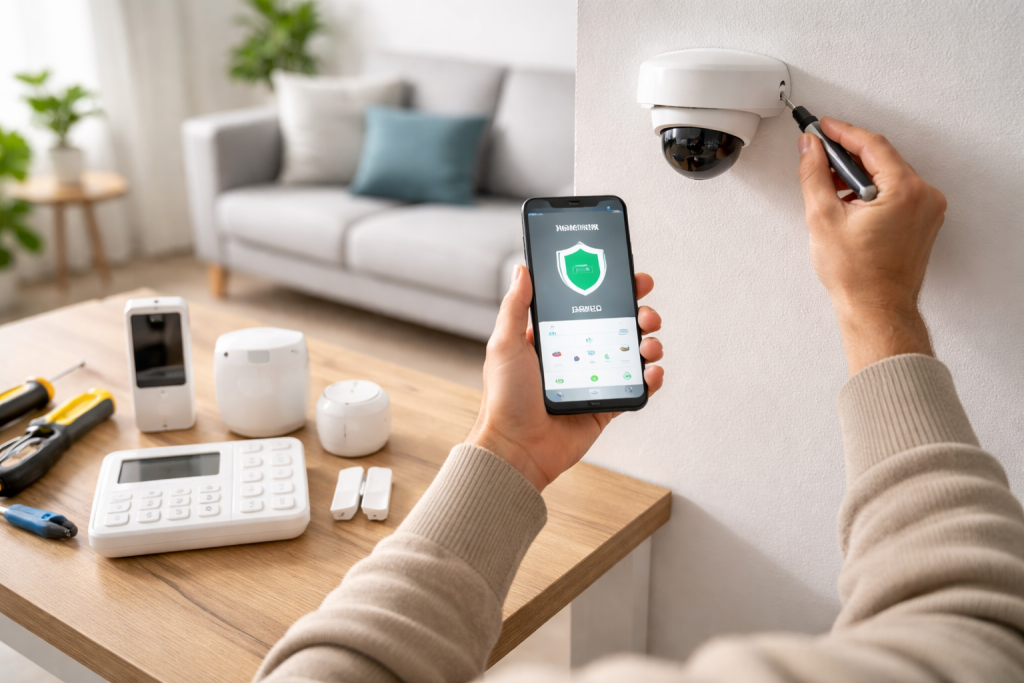
Once you have selected your security system and its components, the next step is installation. DIY systems aim for a user-friendly setup, but a methodical approach guarantees optimal performance.
Strategic Sensor Placement
Careful consideration of sensor placement is paramount. Door and window sensors should be installed on all accessible entry points. Motion detectors should be positioned to cover high-traffic areas without being triggered by pets or routine household activities. Consider the natural flow of your home and identify potential intruder pathways.
Camera Field of View and Coverage
When installing security cameras, prioritise strategic angles that maximise coverage of critical areas like main entryways, driveways, and vulnerable windows. Ensure there are no obstructions blocking the camera’s view. For outdoor cameras, consider weatherproof housing and adequate lighting to enhance night vision capabilities.
Connecting to Your Home Network
Most modern security systems connect to your home Wi-Fi network for remote access, alerts, and seamless integration with other smart home devices. Ensure your Wi-Fi signal is strong throughout your home, especially in areas where security components are installed. Follow the manufacturer’s instructions for connecting each device to your network.
Integrating Smart Technology into Your Home Security System
The advent of smart home technology has revolutionised home security, offering unparalleled convenience, control, and advanced features. Integrating smart devices can elevate your security system to a new level of sophistication.
Smart Locks and Video Doorbells
Smart locks allow you to lock and unlock your doors remotely, grant temporary access to visitors, and receive notifications when doors are opened or closed. Video doorbells provide a live feed of your doorstep, allowing you to see and speak to visitors from anywhere, even if you’re not home. These devices offer an extra layer of access control and insight into who is approaching your property.
Smart Lighting and Automation
Integrating smart lighting with your security system allows you to create automated routines that mimic occupancy, even when you’re away. Lights can be programmed to turn on and off at specific times or in response to motion detection, making it appear as if someone is home. This simple yet effective measure can be a powerful deterrent to potential intruders.
Voice Assistants and App Control
Many smart security systems can be seamlessly integrated with voice assistants like Amazon Alexa or Google Assistant, allowing you to arm and disarm your system with simple voice commands. Dedicated smartphone applications provide comprehensive control over your entire security setup, allowing you to view live camera feeds, manage alerts, and adjust settings from anywhere in the world.
Tips for Maintaining and Monitoring Your Home Security System
A home security system is not a set-it-and-forget-it solution. Regular maintenance and vigilant monitoring are key to guaranteeing its continued effectiveness and responsiveness.
Regular System Checks and Battery Replacements
Periodically test all components of your security system to ensure they are functioning correctly. Check door and window sensors, motion detectors, and camera feeds. Replace batteries in wireless sensors and remotes as recommended by the manufacturer. A proactive approach to maintenance can prevent potential vulnerabilities.
Firmware Updates and Software Maintenance
Like any electronic device, your security system’s components often receive firmware updates that introduce new features, improve performance, and patch security vulnerabilities. Regularly check for and install these updates to keep your system operating optimally and securely. Maintain the latest version of your mobile app as well.
Understanding and Responding to Alerts
Familiarise yourself with the different types of alerts your system generates and how to respond to each. Know whether to contact emergency services directly or if your professional monitoring service handles dispatches. Develop a clear communication plan with family members regarding what to do if an alarm is triggered.
Minimizing False Alarms
False alarms can be a nuisance and can lead to complacency or even fines from law enforcement. Understand the common causes of false alarms, such as pets, open windows, or incorrect sensor placement. Adjust settings and ensure proper sensor calibration to minimise these occurrences and maintain the credibility of your security alerts.
Additional Home Security Measures to Consider
While a comprehensive security system forms the backbone of your home protection, several supplementary measures can further enhance your overall security posture, creating multiple layers of defence.
Reinforcing Doors and Windows
Beyond sensors, physically reinforcing doors and windows significantly improves their resistance to forced entry. Consider installing solid core doors, deadbolt locks with a 1-inch throw, and reinforced strike plates. For windows, consider security film, reinforced frames, or shatter-resistant glass.
Outdoor Lighting and Landscaping
Well-placed outdoor lighting, especially motion-activated lights, can deter intruders by eliminating dark hiding spots around your property. Thoughtful landscaping also plays a role; avoid tall shrubs or trees that could provide cover for intruders near windows or doors. Prune bushes to be below window sills and keep trees away from accessible rooflines.
Neighborhood Watch Programs and Community Engagement
Engaging with your local community through neighbourhood watch programmes can create a collective sense of security. Neighbours looking out for each other can significantly enhance the overall safety of an area. Report suspicious activities to both your neighbours and law enforcement.
Securing Wi-Fi Networks and Smart Devices
As more devices connect to your home network, securing your Wi-Fi becomes paramount. Use a strong, unique password for your router, enable WPA3 encryption if available, and regularly change your password. Keep all smart devices updated to their latest firmware to patch any known security vulnerabilities. Consider segmenting your network with a guest network for visitors to further isolate your main devices.
By carefully considering these aspects and implementing the recommended measures, you can create a robust and effective home security system that provides peace of mind and safeguards your most valuable assets: your home and your loved ones. Home security is an investment in your well-being, ensuring that your sanctuary remains a safe and protected haven.

GoLiveXora is managed by a passionate content creator dedicated to helping people improve their everyday lives through practical knowledge and modern solutions.