
From Chaos to Control: How Voice Assistants Can Transform Your Daily Routine
From the gentle hum of the refrigerator to the incessant ping of notifications, our daily lives often feel like a symphony of demands, pulling us in countless directions. In this perpetual whirlwind, finding moments of calm and control can seem like an elusive dream. Yet, nestled within the digital landscape is a technology poised to revolutionise this very experience: the voice assistant. These intelligent companions, once relegated to science fiction, are now seamlessly integrating into our homes, cars, and even our pockets, promising to transform our chaotic routines into streamlined, efficient, and surprisingly tranquil endeavours.
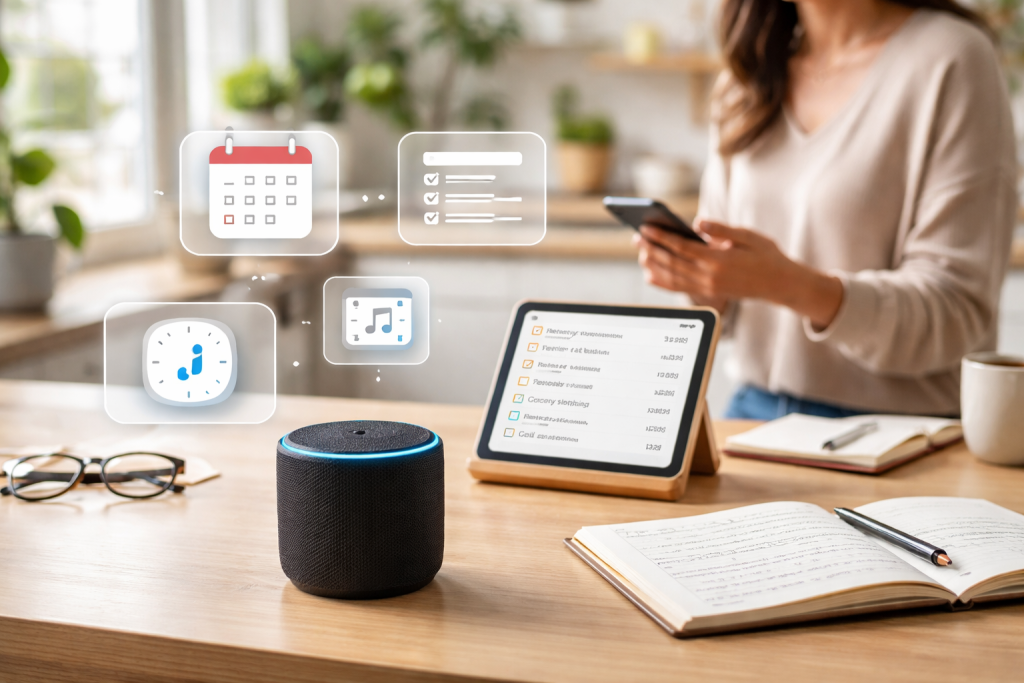
Voice assistants are sophisticated software programmes designed to understand and respond to human voice commands. At their core, they leverage advanced artificial intelligence (AI), natural language processing (NLP), and machine learning (ML) to interpret spoken language, process requests, and then deliver relevant information or execute specific actions. Imagine them as constant, self-learning digital assistants, prepared to help with a wide range of tasks, from simple to intricate.
Contents
- 1 The Underlying Technology
- 2 Popular Voice Assistants and Their Platforms
- 3 Effortless Information Retrieval
- 4 Hands-Free Communication
- 5 Entertainment on Demand
- 6 Dictation and Text Generation
- 7 Quick Reminders and Alarms
- 8 Integrating with Productivity Apps
- 9 Smart Home Control
- 10 Appliance Automation
- 11 Security and Monitoring
- 12 Digital Note-Taking
- 13 Shopping and To-Do Lists
- 14 Idea Capture and Brainstorming
- 15 Scheduling and Appointments
- 16 Timers and Routines
- 17 Interrupting and Prioritizing Tasks
- 18 Advanced Personalization and Contextual Understanding
- 19 Widespread Integration in Smart Environments
- 20 Multimodal Interactions and Emotional Intelligence
The Underlying Technology
The magic of voice assistants lies in their intricate technological architecture. Your device’s microphone records the sound waves when you speak a command, subsequently converting them into digital data. This data is sent to powerful cloud-based servers where the NLP engine analyses the speech, breaking it down into recognisable words and phrases. A crucial step here is intent recognition, where the system identifies the user’s ultimate goal. Is the user asking for the weather, setting an alarm, or playing music? Once the intent is understood, the voice assistant taps into vast databases, web services, and connected devices to fulfil the request. Machine learning continually refines this process, allowing the assistant to better understand accents, nuances in speech, and even anticipate user needs over time.
Popular Voice Assistants and Their Platforms
The landscape of voice assistants is dominated by a few key players, each with their own unique ecosystems and features. Amazon’s Alexa, perhaps the most ubiquitous, powers a wide range of smart speakers and smart home devices. Google Assistant, integrated into Android devices and Google Home speakers, excels at search-related queries and seamlessly connects with Google’s extensive suite of services. Apple’s Siri, a pioneer in the field, is deeply embedded within iOS and macOS devices, offering tight integration with Apple’s hardware and software. Beyond these giants, Samsung’s Bixby, Microsoft’s Cortana, and a growing number of specialised assistants are carving out niches, each contributing to the evolving landscape of conversational AI.
When voice assistants begin to tackle everyday chores and minor inconveniences that collectively consume a significant portion of our time and mental energy, their true power becomes evident. From the moment you wake up until you drift off to sleep, these digital partners can simplify countless interactions.
Effortless Information Retrieval
Gone are the days of fumbling for your phone to check the weather or search for a quick fact. With a simple voice command, you can instantly get updates on current weather conditions, traffic reports for your commute, breaking news headlines, or even the answer to a quick trivia question. This hands-free access to information is particularly invaluable when your hands are occupied, such as while cooking or driving. Imagine asking, “Hey Google, what’s the capital of Madagascar?” without lifting a finger, or “Alexa, what’s on my calendar today?” while still in bed.
Hands-Free Communication
Voice assistants have transformed how we connect with others. Making phone calls, sending text messages, or even initiating video calls can all be done with spoken commands, eliminating the need to type or navigate through menus. This feature is especially beneficial for individuals with mobility challenges or when multitasking is essential, like when you’re preparing dinner and need to call a family member. “Siri, call Mom” or “Alexa, send a text to John saying I’ll be late” become common refrains in a voice-assistant-enabled household.
Entertainment on Demand
Our relationship with entertainment has been fundamentally reshaped by voice assistants. Playing music, podcasts, audiobooks, or even specific radio stations is as simple as asking. No more searching through apps or physical media; just tell your assistant what you want to hear, and it obliges. This seamless integration allows for a more immersive and less interruptive entertainment experience, whether you’re hosting a party, relaxing after a long day, or trying to entertain children with a spoken story.
Beyond simple conveniences, voice assistants are powerful tools for boosting productivity, both at home and in a professional context. By offloading routine tasks and providing quick access to information, they free up valuable mental bandwidth for more complex work.
Dictation and Text Generation
For those who find typing laborious or simply prefer speaking their thoughts, voice assistants offer excellent dictation capabilities. Whether it’s drafting an email, composing a quick note, or creating a shopping list, speaking your text significantly speeds up the process. This feature is particularly valuable for creative professionals, writers, or anyone who frequently juggles multiple ideas and needs to capture them quickly without physical input.
Quick Reminders and Alarms
For individuals constantly juggling commitments, voice assistants act as incredibly efficient personal assistants for managing time-sensitive tasks. A spoken instruction effortlessly sets reminders for appointments, medications, or even to take a break from work. Alarms for waking up, cooking milestones, or scheduled activities ensure that you stay on track throughout your day, reducing the mental burden of remembering every small detail.
Integrating with Productivity Apps
The true power for productivity often lies in the integration of voice assistants with popular productivity applications. Connecting your assistant to your calendar allows you to add appointments, check your schedule, or even reschedule meetings with voice commands. Integration with task management apps enables you to add items to your to-do list or mark tasks as complete. This interconnectedness transforms your voice assistant into a central hub for managing your digital workload, making your entire productivity ecosystem more responsive and adaptable.
Voice assistants’ widespread adoption is inextricably linked with the rise of the smart home. These devices serve as the central command centre for an increasingly intelligent domestic environment, offering unparalleled convenience and control.
Smart Home Control
Imagine commanding your lights to dim, your thermostat to adjust, or your doors to lock with just your voice. Voice assistants make this a reality by acting as the unified interface for a multitude of smart home devices. From smart bulbs and plugs to security cameras and robotic vacuums, a single spoken phrase can orchestrate a symphony of actions, creating a home that responds intuitively to your needs. This level of control not only adds a layer of convenience but also enhances energy efficiency and security.
Appliance Automation
Beyond general smart home control, voice assistants are increasingly integrated directly into appliances themselves. Smart ovens can preheat with a voice command, washing machines can start cycles, and coffee makers can brew your morning cup before you even leave your bed. This automation of everyday household tasks frees up time and mental effort, allowing you to focus on more important endeavours or simply enjoy a more relaxed start to your day. The promise of a fully automated home, where appliances anticipate and respond to your needs, is rapidly becoming a tangible reality.
Security and Monitoring
Voice assistants play a crucial role in enhancing home security and monitoring. Integrated with smart security systems, they can arm or disarm alarms, check the status of door and window sensors, or even display live feeds from security cameras on compatible smart displays. This voice-activated security provides peace of mind and an extra layer of protection, allowing you to manage your home’s security posture with unparalleled ease and responsiveness.
For many, the quest for personal organisation is an ongoing battle against clutter and forgotten tasks. Voice assistants emerge as powerful allies in this struggle, offering intuitive and hands-free methods for keeping track of life’s many details.
Digital Note-Taking
Jotting down ideas, grocery lists, or important details often requires a pen and paper or a digital device. Voice assistants simplify your life by allowing you to dictate notes directly into a digital repository. Whether you’re in the middle of a thought or simply need to capture something quickly, a voice command creates a text-based note that can be categorised, searched, and accessed later. This hands-free note-taking capability significantly enhances productivity during moments of inspiration when a physical notepad is not easily accessible.
Shopping and To-Do Lists
Maintaining comprehensive shopping and to-do lists is a cornerstone of effective personal organisation. Voice assistants excel at this, allowing you to add items to dedicated lists simply by speaking them aloud. “Alexa, add milk to my shopping list,” or “Hey Google, add ‘call the plumber’ to my errands list” makes list management effortless. These lists are often synchronised across devices, ensuring that your organisational efforts are always up-to-date and accessible wherever you are.
Idea Capture and Brainstorming
Creativity often strikes at inconvenient moments. Voice assistants provide an invaluable tool for capturing fleeting ideas and engaging in dynamic brainstorming sessions. Instead of scrambling for a pen or opening an app, you can simply articulate your thoughts, and the assistant will record them. This immediate capture prevents valuable ideas from being lost and facilitates a more fluid and uninterrupted creative process, allowing you to focus on the content rather than the mechanics of documentation.
In an age where time feels like our most precious commodity, effective time management is paramount. Voice assistants offer a suite of features that directly contribute to better scheduling, task prioritisation, and overall temporal awareness.
Scheduling and Appointments
Managing a busy schedule often involves a complex dance of appointments, meetings, and personal commitments. Voice assistants simplify this by allowing you to add events to your calendar, adjust existing appointments, and remind you of upcoming engagements, all through natural language commands. “Siri, add a dentist appointment for next Tuesday at 3 PM.” or “Alexa, what’s my first appointment tomorrow?” transforms calendar management into an intuitive, hands-free experience, reducing the mental overhead associated with keeping track of your schedule.
Timers and Routines
Whether it’s for cooking, exercise, or focused work sessions, timers are an essential tool for time management. Voice assistants offer a versatile way to set multiple timers simultaneously, providing audio cues when each timer expires. Beyond simple timers, the ability to create customised routines allows you to automate a series of actions based on time or specific triggers. For instance, a “morning routine” could involve turning on the lights, playing the news, and brewing coffee, all activated with a single spoken phrase, streamlining your daily transitions and maximising efficiency.
Interrupting and Prioritizing Tasks
While voice assistants are designed to help with tasks, they can also paradoxically help mitigate the constant interruptions of our digital lives. By having an assistant handle quick information retrieval or task delegation, you can avoid picking up your phone or opening a new tab, thereby maintaining focus on your current work. Furthermore, by using voice commands to quickly add urgent tasks to a list, you can externalise the need to remember them, allowing you to return to your current activity without losing track of important follow-ups. In essence, they act as a buffer against the mental fragmentation caused by constant digital demands.
The current capabilities of voice assistants, while impressive, are merely the tip of the iceberg. As AI and machine learning continue to evolve at an exponential rate, the role of these intelligent companions will undoubtedly deepen and diversify, becoming even more integral to our daily existence.
Advanced Personalization and Contextual Understanding
The next generation of voice assistants will move beyond simple command processing to achieve a profound level of personalisation and contextual understanding. Imagine an assistant that anticipates your needs based on your habits, location, and even emotional state. It might proactively suggest a new route to work due to unexpected traffic or recommend a calming playlist if it detects stress in your voice. This level of predictive intelligence will make interactions feel less like commands and more like natural conversations with a truly intuitive partner.
Widespread Integration in Smart Environments
The smart home is just the beginning. Voice assistants will become seamlessly integrated into every facet of our physical environments – smart cities, intelligent vehicles, and even wearable technology. Your car might automatically adjust its climate based on your preferences and exterior weather. Public spaces could offer voice-activated information points or navigation aids. This pervasive integration will create a truly responsive and assistive world, where technology fades into the background, operating through natural vocal interactions.
Multimodal Interactions and Emotional Intelligence
While voice will remain central, future assistants will increasingly embrace multimodal interactions, combining voice with gestures, touch, and even eye-tracking to understand and respond more effectively. Furthermore, significant advancements in emotional AI will enable assistants to detect and respond to human emotions, offering more empathetic and nuanced interactions. An assistant might adjust its tone or suggest a different approach based on your mood, forging a deeper, more human-like connection. This evolution promises a future where voice assistants are not just tools but trusted companions that seamlessly integrate into the rich tapestry of human experience, offering unparalleled control and a sense of calm amidst the daily chaos.

GoLiveXora is managed by a passionate content creator dedicated to helping people improve their everyday lives through practical knowledge and modern solutions.