
Tiny Living, Big Impact: The Ultimate Guide to Organizing Small Spaces
Tiny living has transcended a mere trend to become a conscious lifestyle choice, driven by a desire for sustainability, affordability, and a simpler existence. The allure of a smaller footprint, however, often comes with the challenge of maximising every square inch. This comprehensive guide delves into the art and science of organising, designing, and living large in small spaces, transforming limitations into opportunities for creativity and efficiency.
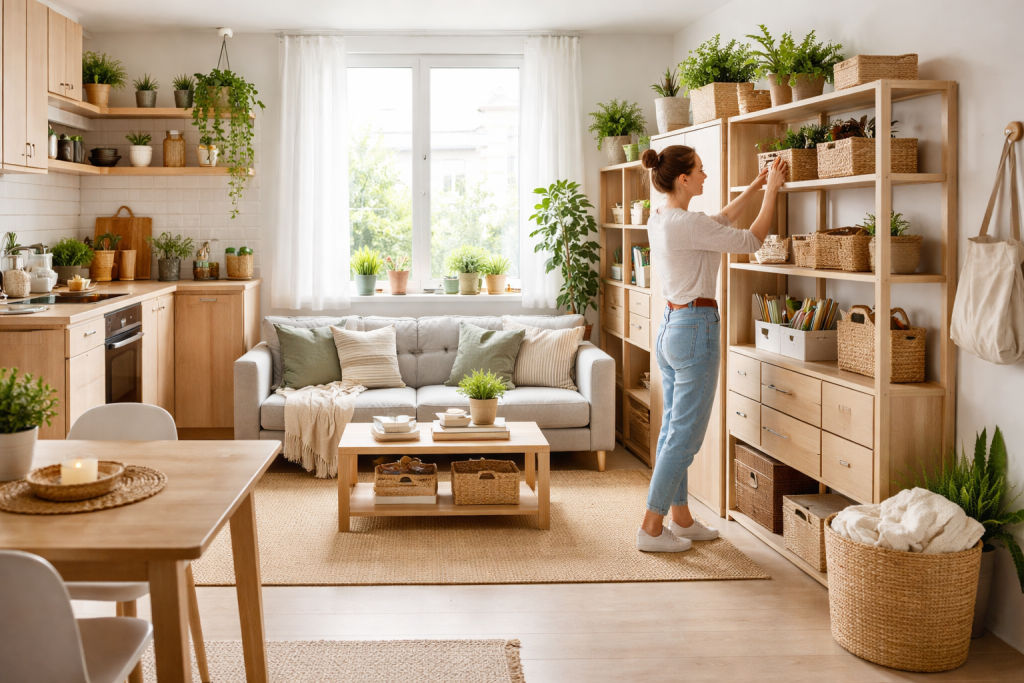
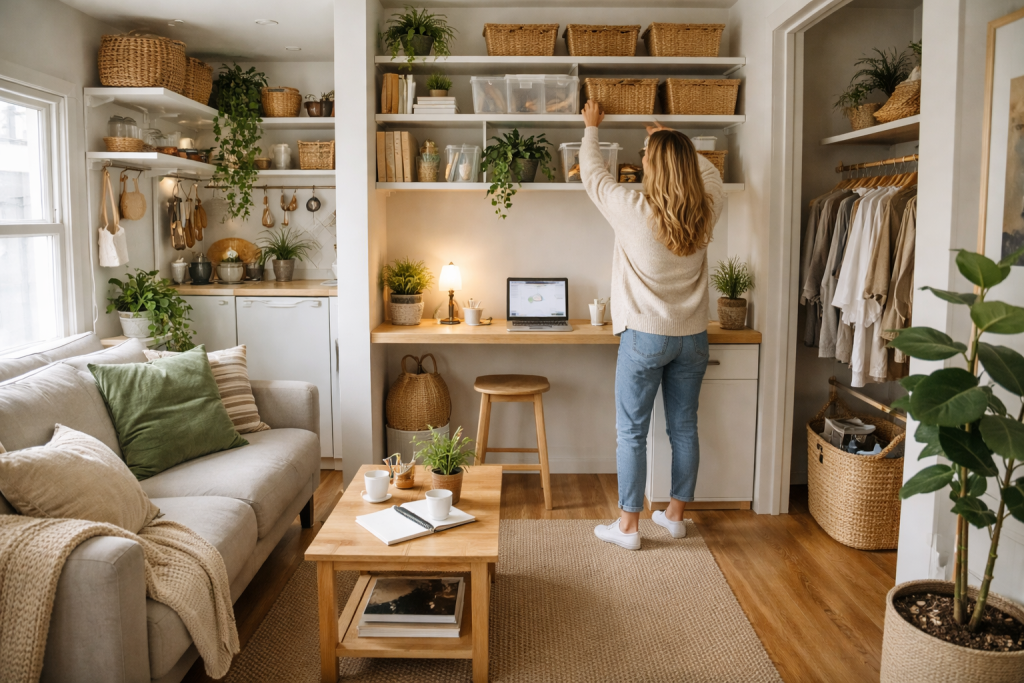
Before a single piece of furniture is moved or a storage bin purchased, the cornerstone of successful small space living lies in a ruthless yet liberating process of decluttering. This isn’t merely about tidying; it’s about a fundamental shift in mindset, embracing the philosophy of “less is more”. Every item in a small home must prove its worth, be it through its practicality or its sentimental significance.
Contents
- 1 The Art of Intentional Accumulation
- 2 Creating Zones and Categories
- 3 Verticality is Your Ally
- 4 Hidden Compartments and Built-in Storage
- 5 Underutilised Spaces as Storage Hubs
- 6 Multi-functional Furniture: The Tiny Home MVP
- 7 Color Palettes and Lighting Tricks
- 8 Embracing Open Concepts and Smart Layouts
- 9 Texture and Soft Furnishings
- 10 Personal Touches and Thoughtful Decor
- 11 The Power of Scent and Lighting
- 12 Kitchen Ingenuity: Every Pot and Pan in Its Place
- 13 Bathroom Bliss: Maximizing Mini Spaces
The Art of Intentional Accumulation
Begin by assessing every possession. Ask yourself, “When was the last time I used this?” “Does this bring me joy?” “Could I borrow or rent this instead of owning it?” Be honest and discerning. Items that haven’t been used in over a year are strong candidates for donation, sale, or recycling. This intentional approach to what you bring into your home prevents unnecessary clutter from forming in the first place. Consider a “one in, one out” policy, where for every new item introduced, an old one must leave. This continuous cycle ensures your space remains optimised and free from accumulation.
Creating Zones and Categories
Even in the most compact spaces, establishing distinct zones for different activities can bring a sense of order. Designate areas for sleeping, working, eating, and relaxation. Within these zones, categorise your belongings. For instance, all kitchen utensils should reside in the kitchen zone, cleaning supplies in the utility area, and so forth. This categorisation makes finding items effortless and returning them to their rightful place a habit, preventing stray objects from cluttering surfaces.
Once your belongings are streamlined, the focus shifts to ingenious storage. Small spaces demand creative, often vertical, solutions that blend seamlessly into the design.
Verticality is Your Ally
Think upwards. Walls are often underutilised in small homes. Floating shelves, tall bookcases, and wall-mounted cabinets can transform unused vertical space into valuable storage. Consider installing shelves above doorways, around windows, or even in unexpected nooks. Hanging organisers for clothes, shoes, and accessories can free up valuable drawer and closet space. Pegboards are another fantastic, customisable solution, allowing you to hang tools, cooking utensils, or even decorative items, keeping them visible and accessible.
Hidden Compartments and Built-in Storage
The beauty of tiny living often lies in ingenious hidden storage. Platforms with pull-out drawers, benches with lift-up lids, and ottomans that double as storage chests are invaluable. If you’re able to customise, built-in shelving, cupboards under window seats, or even a Murphy bed with integrated storage can be game-changers. These solutions keep clutter out of sight, maintaining a clean and uncluttered aesthetic that is crucial for small spaces. Look for furniture that isn’t just serving one purpose but cleverly concealing storage within its design.
Underutilised Spaces as Storage Hubs
Don’t overlook the often-forgotten areas. The space under your bed can house shallow bins for seasonal clothing or extra linens. The back of doors can be fitted with shoe organisers, towel racks, or shallow shelving. Even the seemingly empty space between appliances can be utilised with slim rolling carts. Every inch has potential if you look at it with a creative eye.
Small spaces don’t have to sacrifice style for functionality. The key is to integrate them seamlessly, creating an environment that feels both efficient and aesthetically pleasing.
Multi-functional Furniture: The Tiny Home MVP
Multi-purpose furniture is the undisputed hero of small space design. A sofa that converts into a bed, a dining table that folds down or extends, nesting tables, ottomans with storage, or a coffee table with built-in drawers are all excellent investments. These pieces minimise the need for multiple single-purpose items, saving valuable floor space. Consider a desk that folds into the wall when not in use, or a kitchen island that can also serve as a dining area and extra prep space.
Color Palettes and Lighting Tricks
Lighter colour palettes can make a small room feel more expansive and airy. White, off-white, and pale pastels reflect light, visually pushing back walls. Incorporate pops of colour through accessories or a single accent wall to add personality without overwhelming the space. Strategic lighting is equally important. Utilise natural light as much as possible by keeping windows unobstructed. Supplement with layered artificial lighting – ambient, task, and accent – to brighten dark corners and create a more inviting atmosphere. Wall-mounted sconces, recessed lighting, and lamps with a small footprint are ideal. Mirrored surfaces can also work wonders, reflecting light and creating the illusion of greater depth.
Embracing Open Concepts and Smart Layouts
In many tiny homes and apartments, an open-concept floor plan is inherent. While this can feel expansive, it’s important to define zones within the open space without erecting physical barriers. Use rugs to delineate areas, or strategically place furniture to create subtle divisions. For example, a sofa can act as a natural separator between a living area and a dining nook. Keep pathways clear and avoid cluttering the centre of the room to maintain an unobstructed flow.
Despite their compact nature, small spaces can exude warmth and intimacy. The deliberate creation of a cosy and inviting atmosphere is paramount to truly enjoying tiny living.
Texture and Soft Furnishings
Introduce various textures through throws, pillows, rugs, and curtains. These elements add depth and visual interest, making a small space feel less stark and more welcoming. Opt for natural materials like wool, cotton, and linen for a touch of warmth and comfort. Layering different textures can create a rich, inviting environment.
Personal Touches and Thoughtful Decor
It’s the personal touches that transform a house into a home. Display meaningful photographs, artwork, or souvenirs. Choose decor items that are both beautiful and significant to you, avoiding excessive knick-knacks that can quickly accumulate and clutter a small area. Consider using plants to bring life and freshness into your space, but choose varieties that don’t take up too much floor space, such as hanging vegetation or slender, tall options.
The Power of Scent and Lighting
Beyond visual aesthetics, engaging other senses can significantly enhance the ambiance. Incorporate pleasant scents through diffusers, candles, or fresh flowers. As mentioned earlier, strategic lighting plays a crucial role. Warm, dimmable lighting, especially in the evenings, can create a soothing and intimate atmosphere, perfect for unwinding after a long day. Avoid harsh overhead lighting that can make a small space feel sterile.
These two spaces, often the smallest in any home, present unique organisational challenges. However, with thoughtful planning, they can be highly functional and efficient.
Kitchen Ingenuity: Every Pot and Pan in Its Place
In tiny kitchens, every item needs a dedicated home. Utilise drawer dividers for utensils, cutlery, and spices. Pot and pan organisers can stack cookware vertically, saving cabinet space. Wall-mounted magnetic knife strips free up valuable counter space. Consider a dish rack that rolls over the sink for drying or a small, compact dishwasher if space allows. Under-sink organisers can tidy cleaning supplies. A rolling island or cart can provide extra prep space and storage when needed and then be tucked away. Embrace command hooks for hanging hand towels and frequently used tools.
Bathroom Bliss: Maximizing Mini Spaces
Over-the-toilet storage units, slim shower caddies, and wall-mounted cabinets are essential for maximising vertical space in small bathrooms. Utilise drawer organisers for toiletries and cosmetics. Command hooks can be used for robes and towels, freeing up towel bars. Medicine cabinets with clever interior compartments are a must. Consider opting for a pedestal sink or a wall-mounted sink to create more floor space and an illusion of openness. If possible, a sliding barn door can save valuable swing space compared to a traditional hinged door. Roll-out carts for extra toilet paper or cleaning supplies can also be a discreet solution.
By embracing decluttering, leveraging smart storage, designing intentionally, and crafting a cosy atmosphere, tiny living becomes not a sacrifice, but an enriched way of life. The impact of a well-organised small space extends beyond aesthetics; it fosters tranquillity, reduces stress, and allows for greater focus on experiences rather than possessions.

GoLiveXora is managed by a passionate content creator dedicated to helping people improve their everyday lives through practical knowledge and modern solutions.