
Say Goodbye to Stiffness: The Ultimate Desk Worker Stretching Guide
The modern workplace often demands prolonged periods of sitting, a reality that can lead to a host of physical discomforts, primarily stiffness. For those tethered to desks for the majority of their day, the subtle ache in the neck can develop into a persistent pain, the tight shoulders can restrict movement, and the lower back can become a constant source of complaint. This sedentary lifestyle, while a hallmark of many professional roles, comes at a significant cost to our physical well-being. Recognising this, and armed with accessible and effective solutions, allows us to proactively combat the detrimental effects of prolonged sitting.
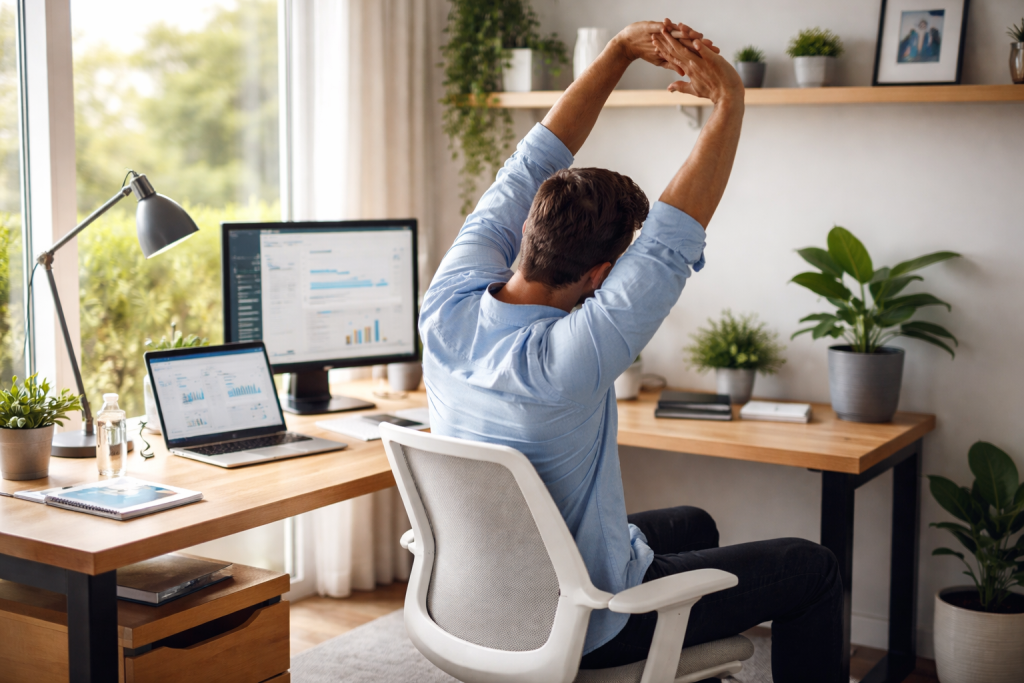
In the quest for productivity, it’s easy to overlook the fundamental needs of our bodies. Our musculoskeletal system is designed for movement, not for static, prolonged postures. When we sit for extended durations, some muscles become shortened and tight, while others become elongated and weak. This imbalance is the breeding ground for stiffness, pain, and an increased risk of injury. Stretching acts as a vital countermeasure, restoring muscle length, improving circulation, and fostering greater joint mobility. It’s not merely about alleviating discomfort; it’s about safeguarding our long-term physical health and enhancing our ability to perform our work effectively and comfortably. Think of stretching as an essential part of your professional toolkit, as crucial as your keyboard or monitor. Its benefits extend beyond immediate relief; regular stretching can prevent chronic pain conditions and improve overall posture, contributing to a more confident and comfortable presence in the workplace.
Contents
- 1 A Proactive Approach to Pain Prevention
- 2 Enhancing Circulation and Energy Levels
- 3 The Neck and Upper Back Conundrum
- 4 The Lower Back and Hip Tightness
- 5 The Wrist and Forearm Strain
- 6 Gentle Neck Tilts
- 7 Shoulder Rolls
- 8 Upper Trapezius Stretch
- 9 Chest Opener Stretch
- 10 Seated Spinal Twist
- 11 Hip Flexor Stretch (Modified)
- 12 Gluteal Stretch (Seated Pigeon)
- 13 Knee-to-Chest Stretch (Modified)
- 14 The Power of Micro-Breaks
- 15 Scheduled “Move and Stretch” Sessions
- 16 Active Commuting or Lunch Breaks
- 17 Post-Work Wind-Down
- 18 Mindful Posture Awareness
- 19 Dynamic Movement Throughout the Day
- 20 Ergonomic Adjustments
- 21 Hydration is Key
- 22 Reduced Pain and Discomfort
- 23 Improved Posture and Body Mechanics
- 24 Enhanced Productivity and Focus
- 25 Increased Energy Levels and Reduced Fatigue
- 26 Greater Range of Motion and Mobility
A Proactive Approach to Pain Prevention
The cumulative effect of sitting without regular movement can lead to chronic issues like carpal tunnel syndrome, sciatica, and chronic back pain. By incorporating stretching into your daily routine, you are actively preventing these painful conditions from taking root. It’s an investment in your future self, ensuring that your career doesn’t come at the expense of your physical well-being.
Enhancing Circulation and Energy Levels
When we sit for too long, blood flow can become sluggish, leading to fatigue and a general feeling of lethargy. Stretching encourages blood circulation, delivering vital oxygen and nutrients to muscles and tissues. This improved circulation can leave you feeling more energised and focused throughout the workday, a significant advantage for anyone battling the midday slump.
The human body, when subjected to the same posture for hours, inevitably develops tension in predictable areas. For desk workers, these commonly affected regions become familiar landscapes of discomfort. Understanding these specific problem zones is the first step toward targeted relief.
The Neck and Upper Back Conundrum
The act of looking at a screen often involves a forward head posture, straining the muscles in the neck and upper back. The shoulders, hunched forward to accommodate the keyboard and mouse, also become tight and rigid. This combination can lead to headaches, a feeling of tightness across the shoulders, and restricted neck movement, making simple actions like turning your head an uncomfortable experience.
The Lower Back and Hip Tightness
Prolonged sitting compresses the discs in the lower spine and shortens the hip flexor muscles. These muscles, located at the front of your hips, play a crucial role in movement, but when they remain contracted for extended periods, they can pull on the pelvis and contribute to lower back pain. Additionally, the gluteal muscles often become inactive, leading to weakness and further imbalances.
The Wrist and Forearm Strain
Repetitive typing and mouse use can lead to strain in the wrists and forearms. Tendinitis and carpal tunnel syndrome are common ailments resulting from this repetitive stress. The muscles responsible for gripping and manipulating the mouse, as well as those involved in typing, can become fatigued and inflamed.
Addressing neck and shoulder stiffness requires mindful, targeted movements that gently lengthen and release these often-tightened muscles. These stretches can be performed discreetly at your desk, offering immediate relief without requiring any special equipment or a change of clothes.
Gentle Neck Tilts
Begin by sitting tall with your shoulders relaxed. Slowly tilt your head to the right, aiming to bring your right ear towards your right shoulder. Avoid shrugging your shoulder. You should feel a gentle stretch along the left side of your neck. Hold for 20-30 seconds, breathing deeply. Gently return your head to the centre and repeat on the left side. For an added stretch, you can gently press your hand on the opposite side of your head to deepen it, but never force the movement.
Shoulder Rolls
This is a classic for a reason. Sit upright and gently roll your shoulders forward in a circular motion for 10-15 repetitions. Then, reverse the direction and roll your shoulders backward for another 10-15 repetitions. Focus on making the circles as large as you comfortably can, feeling the muscles in your upper back and shoulders release.
Upper Trapezius Stretch
From a seated position, gently place your right hand on the back of your head. Lightly pull your head towards your right shoulder, creating a stretch in the back of your neck and the top of your left shoulder. Ensure your left shoulder remains relaxed and down. Hold for 20-30 seconds. Repeat on the other side, placing your left hand on the back of your head and gently pulling towards your left shoulder, Stretch the right side of your neck and upper back.
Chest Opener Stretch
To counteract the hunched-over posture, this stretch is invaluable. Interlace your fingers behind your back and gently straighten your arms, lifting your chest towards the ceiling. You should feel the stretch across your chest and the front of your shoulders. Hold for 20-30 seconds, taking deep breaths. If you find it difficult to interlace your fingers, you can hold a towel or strap between your hands to achieve a similar effect.
The sedentary nature of desk work profoundly impacts the lower back and hips. Fortunately, simple stretches can be performed to alleviate tightness, improve mobility, and combat the discomfort that often arises from prolonged sitting.
Seated Spinal Twist
Sit upright in your chair with your feet flat on the floor. Place your right hand on the outside of your left knee. Place your left hand on the back of your chair for support. Gently twist your torso to the left, looking over your left shoulder. Keep your hips facing forward as much as possible. You will feel a stretch through your lower back and obliques. Hold for 20-30 seconds, breathing deeply. Return to the centre and repeat the twist to the right.
Hip Flexor Stretch (Modified)
While it’s difficult to do a full hip flexor stretch at your desk, a modified version can be effective. While sitting, extend one leg forward as far as you are comfortable, keeping your heel on the floor. Lean your torso slightly forward from your hips, maintaining a straight back. You should feel a gentle stretch in the back of your extended leg and potentially a slight engagement in your hip flexor on the other side. Hold for 20-30 seconds. Repeat with the other leg.
Gluteal Stretch (Seated Pigeon)
This stretch can be performed while remaining seated. Cross your right leg over your left knee, creating a figure-four shape. Ensure your right ankle is resting comfortably on your left thigh. Keeping your back straight, gently lean forward from your hips. You should feel a stretch in your right gluteal muscle. Hold for 20-30 seconds. Repeat with your left leg crossed over your right knee.
Knee-to-Chest Stretch (Modified)
While sitting, gently bring one knee up towards your chest, hugging it with your hands. You should feel a stretch in your lower back and hip. Hold for 20-30 seconds. Repeat with the other leg. For a deeper stretch, you can gently pull the knee slightly further towards your chest, but always listen to your body and avoid any sharp pain.
The most effective stretching programme is one that is consistently practised. Integrating movement into your workday doesn’t require a complete overhaul of your schedule. Small, consistent efforts yield significant long-term benefits.
The Power of Micro-Breaks
Instead of waiting for a dedicated free hour, embrace micro-breaks. Set a timer to remind yourself to stand up and stretch every 30-60 minutes. Even a minute or two of movement can make a substantial difference. These short, frequent breaks prevent muscles from settling into prolonged static positions and help maintain blood flow.
Scheduled “Move and Stretch” Sessions
Designate specific times for more focused stretching. Perhaps during your morning coffee break or a short window before lunch, devote 5–10 minutes to your chosen stretches. Treat these as important appointments with yourself, just as you would a client meeting.
Active Commuting or Lunch Breaks
If possible, incorporate movement into your commute. Walking or cycling even part of the way can contribute to overall mobility. During your lunch break, take a short walk around the block to get your blood flowing and loosen up before returning to your desk.
Post-Work Wind-Down
Dedicate a few minutes at the end of your workday to a more thorough stretching routine. This can help release any accumulated tension and prepare your body for rest and recovery. It’s a way to signal to your body that the workday is over and it’s time to relax.
Beyond dedicated stretching sessions, there are numerous small adjustments and habits you can adopt to foster flexibility and mobility throughout your workday without leaving your workspace.
Mindful Posture Awareness
Constantly check in with your posture. Are your shoulders rounded? Is your head jutting forward? Consciously pull your shoulders back, engage your core, and bring your head back into alignment. This simple act of awareness can prevent a lot of stiffness from developing.
Dynamic Movement Throughout the Day
Don’t be afraid to move while seated. Shift your weight, subtly sway your hips, or gently rotate your torso. These small, fluid movements keep your joints lubricated and your muscles engaged without requiring you to stand.
Ergonomic Adjustments
Ensure your workspace is set up ergonomically. Your chair should support your back, your feet should be flat on the floor or on a footrest, and your monitor should be at eye level. Proper positioning reduces strain and encourages better posture.
Hydration is Key
Dehydration can contribute to muscle stiffness and cramps. Ensure you are drinking plenty of water throughout the day. Well-hydrated muscles are more pliable and less prone to stiffness.
The rewards of consistently incorporating stretching into your desk worker life are multifaceted and extend far beyond the immediate relief of tight muscles. It’s an investment in your overall health and well-being, impacting both your physical and mental state.
Reduced Pain and Discomfort
The most obvious benefit is the reduction in aches, pains, and stiffness associated with prolonged sitting. By regularly lengthening and strengthening muscles, you alleviate the strain on your body, leading to a more comfortable and pain-free workday.
Improved Posture and Body Mechanics
Consistent stretching helps to correct postural imbalances caused by prolonged sitting. As your muscles regain proper length and strength, your body naturally aligns itself better, leading to improved posture, reduced risk of injuries, and a more confident bearing.
Enhanced Productivity and Focus
When your body is free from discomfort, your mind is also freed up. Reduced physical strain can lead to increased energy levels, improved concentration, and ultimately, enhanced productivity. When nagging aches and pains don’t distract you, you’ll find it easier to focus on tasks.
Increased Energy Levels and Reduced Fatigue
Stretching promotes better blood circulation, which delivers vital oxygen and nutrients to your muscles and brain. This improved circulation combats the lethargy often associated with sedentary work, leaving you feeling more energised and less prone to midday fatigue.
Greater Range of Motion and Mobility
Regular stretching helps you maintain and improve the flexibility of your muscles and the mobility of your joints. This allows for a greater range of motion in your everyday activities, making simple tasks easier and reducing the risk of injuries during other physical pursuits outside of work.
In conclusion, embracing a stretching routine as a desk worker is not a luxury but a necessity. By understanding the common areas of stiffness, employing targeted stretching techniques, and integrating movement into your daily routine, you can effectively combat the negative impacts of prolonged sitting. The benefits are far-reaching, promising a more comfortable, healthier, and productive professional life. Say goodbye to stiffness and embrace the freedom of movement.

GoLiveXora is managed by a passionate content creator dedicated to helping people improve their everyday lives through practical knowledge and modern solutions.